

About JEEPSJournal of Education and Educational Policy Studies (JEEPS) is a bimonthly open-access, peer-reviewed journal published by EWA Publishing. The journal unites global education researchers, policy formulators and frontline educators, acting as a vital bridge linking standardized educational theory, scientific policy design and classroom teaching practice. Its core positioning lies in excavating research’s practical teaching value and evidence-based educational policy value, with special focus on talent cultivation, disciplinary construction and regional demonstration promotion value of educational research; the journal delivers operable classroom optimization plans and data-based policy research evidence to university education researchers, education administrative staff and K12 frontline teachers to fully reflect the practical value of educational research outcomes.For more details of the JEEPS scope, please refer to the Aim & Scope page. For more information about the journal, please refer to the FAQ page or contact info@ewapublishing.org. |
| Aims & scope of JEEPS are: ·Education ·Psychology ·Educational Policy ·Sports Science ·Marxism |
Article processing charge
A one-time Article Processing Charge (APC) of 450 USD (US Dollars) applies to papers accepted after peer review. excluding taxes.
Open access policy
This is an open access journal which means that all content is freely available without charge to the user or his/her institution. (CC BY 4.0 license).
Your rights
These licenses afford authors copyright while enabling the public to reuse and adapt the content.
Peer-review process
Our blind and multi-reviewer process ensures that all articles are rigorously evaluated based on their intellectual merit and contribution to the field.
Editors View full editorial board

Huntsville, USA
mallen@shsu.edu

Leeds, UK
C.Eugeni@leeds.ac.uk

Notre Dame, USA
kbuhring@saintmarys.edu

Boston, USA
r.arrowood@northeastern.edu
Latest articles View all articles
Problematic Social Media Use (PSMU) is associated with academic procrastination, but this association is not universal, and the conditions under which it holds have not been systematically examined. This narrative review organises the empirical evidence by boundary condition rather than by theoretical account, drawing on Temporal Motivation Theory, a control-theory account of self-regulatory failure, and the I-PACE model. Studies were included only if they measured social media use as the exposure, academic procrastination as the outcome, and the proposed condition as a mediator or a moderator; a condition was retained only if at least three studies met these criteria. Three conditions qualified: low self-control, gender, and low grit. All three are characteristics of the person rather than of the situation, and no situational condition met the criteria. Identifying who is vulnerable would allow academic support to be targeted at the capacities that determine whether use becomes academic procrastination, rather than offered as general advice about reducing screen time.

 View pdf


Everyday adult decisions often involve mathematics, but their difficulty rarely lies in calculation alone. Dividing resources, assigning responsibilities, purchasing convenience, or trading money for time also requires people to identify criteria, compare unlike quantities, state assumptions, and explain what they regard as fair or valuable. This study reports the design and pilot evaluation of two adult numeracy modules developed during a mathematics-equity-oriented education internship in Xi'an, China: Fair Allocation and Money–Time Trade-offs. The study used a design-based orientation and a one-group pretest–posttest pilot with 36 adults. Evaluation combined rubric-scored tasks, a novel-scenario transfer task, usefulness ratings, a negotiation-agency item, and a one-week follow-up. Mean decision-criteria scores increased from 2.08 to 3.33 out of 4, and model-based reasoning scores from 5.52 to 7.60 out of 10. Usefulness averaged 4.56 out of 5; 88.9% scored at least 3 out of 4 on the transfer task. Negotiation agency rose from 2.94 to 4.19 out of 5. At one week, 19 of 29 respondents reported trying at least one framework element in an actual decision. These descriptive results suggest short-term improvement in explicit, model-based reasoning and perceived relevance, but they do not establish causal effectiveness or durable behavioral change. Adult numeracy models are therefore presented as deliberative scaffolds that make criteria, assumptions, trade-offs, and limitations visible without replacing personal or ethical judgment.
View pdf
Evidence-based practice highlights the need to connect research with professional practice, positioning practitioners as active agents of change. Inclusive research and inclusive education share this commitment to collaboration and social justice. This study draws on a review of key literature and international policy examples from Thailand and Iceland to examine how inclusive research fosters collaboration with marginalised groups and how inclusive education has influenced equitable legislation. Inclusive approaches have reshaped researcher–participant dynamics, contributed to anti-discriminatory policies, and supported the development of fully inclusive education systems. When applied to educational inequality among ethnic minorities in China, persistent gaps remain in resources, policy implementation, and responsiveness to minority students' needs. Inclusive research and education offer a coherent framework for advancing equity, provided that policy development is grounded in participatory evidence and teaching practices are adapted to the diverse learning characteristics of minority students.
View pdf
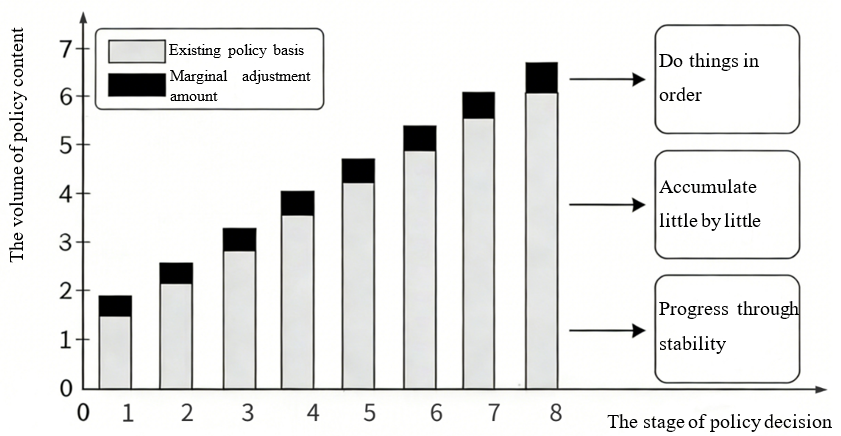
Against the backdrop of the rapid development of the digital economy and the continued implementation of the strategy of building China into a leading country in education, education digitalization has become a key force for advancing educational reform and enhancing national competitiveness. However, given the complex interplay of accelerating technological change, demographic shifts, tightening fiscal constraints, and mounting ethical risks, an aggressive approach to advancing education digitalization is neither feasible nor sustainable. Building on the strengths of the incrementalist decision-making model, which acknowledges the complexity of real-world conditions and seeks to optimize policies through gradual improvements, this study applies the model to examine the evolution of education digitalization in China. The findings indicate that China's education digitalization has progressed through four stages: early exploration and the laying of an infrastructure foundation; educational resource sharing and platform development; technological integration and the development of new infrastructure; and comprehensive advancement and strategic upgrading. Policy objectives have gradually evolved from usability to empowerment, while policy content has followed a trajectory from "hardware foundations" to "resource integration", "governance upgrading", and "ecosystem openness". Meanwhile, policy actors have shifted from a predominantly single-actor structure toward greater multi-actor collaboration. Looking ahead, education digitalization policies will follow the logic of incrementalism by maintaining policy continuity, responding to changing circumstances, and achieving system-level transformation through small-scale, gradual reforms.
View pdf
Volumes View all volumes
2026
Volume 4April 2026
Find articlesVolume 4June 2026
Find articlesVolume 4October 2026
Find articles2025
Volume 3December 2025
Find articlesVolume 3March 2025
Find articlesVolume 3June 2025
Find articlesAnnouncements View all announcements
Journal of Education and Educational Policy Studies
We pledge to our journal community:
We're committed: we put diversity and inclusion at the heart of our activities...
Journal of Education and Educational Policy Studies
The statements, opinions and data contained in the journal Journal of Education and Educational Policy Studies (JEEPS) are solely those of the individual authors and contributors...
Indexing
The published articles will be submitted to following databases below: