Articles in this Volume

Research Article Open Access
Research on AI-empowered teaching in physical geography courses
Artificial Intelligence (AI) technology is transforming talent cultivation models and teaching practices in higher education. Physical Geography is a core foundational course in the Geography Science major. Its content system is complex and wide-ranging, spans large spatiotemporal scales, and closely integrates theory with practice; therefore, traditional teaching models face numerous practical challenges. This paper reviews the policy background of AI empowering higher education and the current research status of geography teaching, analyzes the value of integrating AI technology into Physical Geography course teaching, and, by combining literature research and case analysis, examines the current situation of AI-empowered Physical Geography teaching. It summarizes the main problems, analyzes their causes, and proposes teaching strategy recommendations from four aspects: teaching resource development, teaching model innovation, faculty capacity improvement, and evaluation system reconstruction. The study concludes that the key to AI-empowered Physical Geography teaching lies in establishing a "human-AI collaborative" teaching ecology. While fully leveraging technological advantages, it is important to prioritize the cultivation of higher-order abilities such as critical thinking.
Show more
Read Article PDF
Cite
Research Article Open Access
Mathematical tools for understanding a complex world: designing adult courses for critical thinking development
Adult learners often stop engaging in mathematics after formal school education, but existing literature on adult education contains limited work on mathematic courses centered on critical thinking rather than career or examination-based goals. This study tested the specific teaching methods of gamification and emotional triggering context and their relationship with the motivation to join in with online mathematical courses for adults. A questionnaire survey was conducted, and 89 participants aged 20 and above were recruited through convenient sampling. The survey tool adopts a funnel shaped layout. Quantitative analysis indicates that the perceived value of adult mathematics thinking courses by participants does not directly translate to their willingness to participate. Based on these empirical models, two illustrative adult course cases were constructed with the core principles of real-world relevance and moderate gamification. This study provides actionable design insights for online adult mathematics education.
Show more
Read Article PDF
Cite
Research Article Open Access
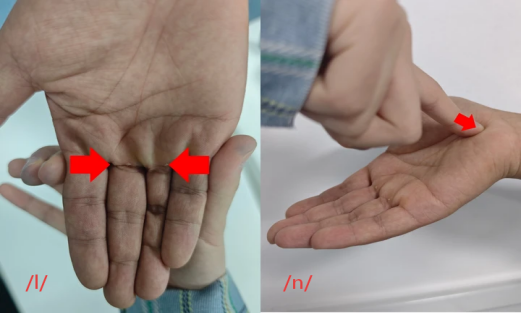
Theoretical construction of an embodied approach to Mandarin pronunciation instruction: a case study of alveolar consonants /n/ and /l/
Article thumbnail
The confusion between Mandarin alveolar consonants /n/ and /l/ represents a persistent challenge in pronunciation instruction, where conventional approaches rely heavily on auditory discrimination and imitation with inconsistent efficacy. Grounded in embodied cognition theory, this study adopts grounded theory methodology and performs three-level coding of relevant literature to construct an integrative pedagogical model. Analysis reveals that existing studies attribute n/l articulatory errors to inadequate lingual positioning, ambiguous airflow perception, and negative L1 transfer, with the underlying mechanism being a disconnect between perceptual and motor control. Embodied cognition provides a novel explanatory framework that redefines phonetic learning as the acquisition of sensorimotor skills. Accordingly, the proposed model centers on the "embodied transformation of articulatory knowledge", encompassing three core components: Embodied Externalization, Proprioceptive Encoding, and Contextual Transfer, supported by teacher development and resource construction. This model overcomes the limitations of traditional empirical paradigms, offering systematic theoretical grounding and actionable strategies for n/l pedagogy.
Show more
Read Article PDF
Cite